Serengeti vs Ngorongoro: What Is the Difference?
Choosing between the Serengeti and Ngorongoro Crater is one of the most common dilemmas faced by travelers planning a Tanzania safari. Both are world-renowned destinations offering exceptional wildlife experiences, but they differ significantly in geography, atmosphere, logistics, and what you can expect from your game drives. Rather than declaring one destination universally better, this guide will help you understand the unique characteristics of each so you can make an informed decision based on your personal preferences and travel goals.
Geography and Landscape
The fundamental difference between these two destinations lies in their geography. The Serengeti is a vast ecosystem covering approximately 14,750 square kilometers (5,700 square miles) of savanna, grasslands, woodlands, and granite kopjes. It stretches from the southern plains to the northern reaches near the Kenya border, offering diverse landscapes that change dramatically with the seasons.
The Ngorongoro Crater is a collapsed volcanic caldera measuring roughly 19 kilometers (12 miles) across and 600 meters (2,000 feet) deep. This enclosed basin creates a unique self-contained ecosystem where wildlife has been isolated for thousands of years. The crater floor covers about 260 square kilometers (100 square miles), making it significantly smaller than the Serengeti but remarkably dense with animals.
Wildlife Density and Viewing
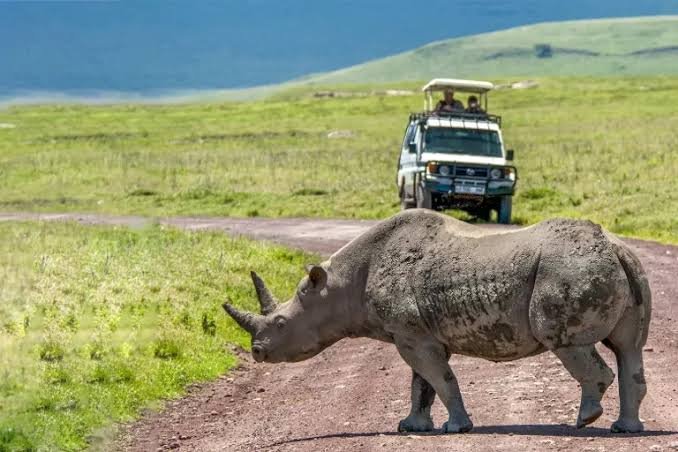
Both destinations offer exceptional wildlife viewing, but the experiences differ considerably. The Ngorongoro Crater boasts one of the highest concentrations of wildlife in Africa, with approximately 25,000 large animals living within the crater walls. This density means you are almost guaranteed to see a wide variety of species during a single game drive, including lions, elephants, buffalo, hippos, and the elusive black rhino.
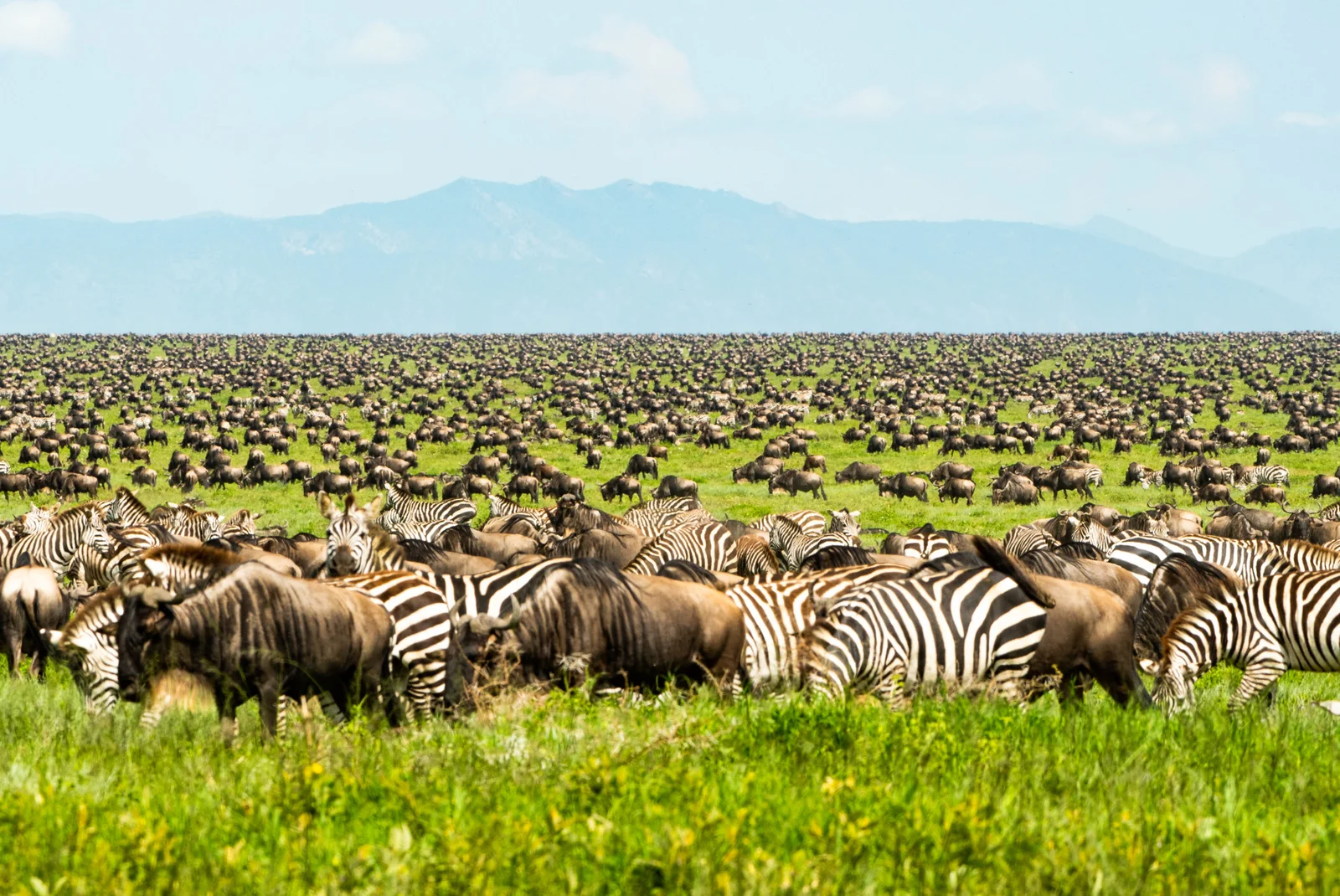
The Serengeti offers a different kind of wildlife experience spread across a much larger area. While individual areas may have lower animal density than the crater, the sheer scale of the ecosystem supports incredible biodiversity. The Serengeti is particularly famous for the Great Migration, where over 1.5 million wildebeest, 200,000 zebras, and thousands of gazelles move across the landscape in search of fresh grazing.
The Big Five Experience
Both destinations are home to the Big Five (lion, leopard, elephant, buffalo, and rhinoceros), but your chances of seeing each vary. The Ngorongoro Crater offers the best opportunity to see all five in a single day due to the concentrated wildlife and the protected status of its black rhino population. Lions are particularly abundant in the crater, and elephant sightings are virtually guaranteed.
In the Serengeti, Big Five viewing is excellent but requires more time and patience spread across the vast ecosystem. Leopards are often found near riverine forests and kopjes, while rhino sightings are more challenging and typically occur in specific protected areas. The Serengeti's larger territory allows for more natural animal behavior and predator-prey interactions.
Great Migration Connection
The Serengeti is inextricably linked to the Great Migration, one of nature's most spectacular events. The migration follows a roughly circular path through the Serengeti ecosystem, with different areas offering unique viewing opportunities depending on the time of year. Witnessing the river crossings at the Grumeti or Mara Rivers is a bucket-list experience for many safari travelers.
The Ngorongoro Conservation Area borders the Serengeti, and some migration herds pass through the northern part of the crater's rim during their annual journey. However, the main migration routes do not pass through the crater itself, making the Serengeti the definitive destination for migration experiences.
Game Drive Experience
Game drives in the Ngorongoro Crater follow a specific route along the crater floor, with vehicles often converging at popular wildlife sightings. The crater's enclosed nature means you will spend most of your time on the flat crater floor, with stunning views of the surrounding walls. A typical game drive lasts 4-5 hours, as the crater's compact size means you can see most of its highlights in a single outing.
Serengeti game drives offer more variety and flexibility. You can spend full days exploring different areas, from the southern plains to the central Seronera region to the western corridor. The larger area allows for longer drives with fewer vehicles, more diverse landscapes, and opportunities to witness natural behaviors like predator hunts and territorial disputes.
Accommodation Options
Both destinations offer a range of accommodation from luxury lodges to budget camping, but availability and style differ. The Ngorongoro Crater has a limited number of lodges perched on the crater rim, offering spectacular views but at premium prices. These rim lodges provide easy access to the crater floor for early morning game drives.
The Serengeti has more accommodation options spread across various regions, from luxury tented camps that follow the migration to permanent lodges in central Seronera. The variety of locations means you can choose accommodation based on your interests, whether that is being near the migration, in prime predator territory, or in more remote areas for fewer crowds.
Travel Time and Logistics
Getting to each destination from Arusha, Tanzania's safari capital, takes different amounts of time. The Ngorongoro Crater is approximately 3-4 hours by road, making it accessible for shorter trips or as part of a multi-destination itinerary. The Serengeti is further, with central Seronera about 5-6 hours by road or a 1-hour flight to one of several airstrips.
Flying to the Serengeti significantly reduces travel time and allows for more time on game drives. Several bush airstrips serve different areas of the park, with scheduled charter flights operating daily. The Ngorongoro Conservation Area does not have airstrips on the crater rim, so road access is the only option.
Photography Opportunities
Both destinations offer incredible photography opportunities, but the characteristics differ. The Ngorongoro Crater provides dramatic backdrops with the crater walls framing your shots. The concentrated wildlife means frequent opportunities to photograph animals at close range, though multiple vehicles at sightings can create crowded conditions.
The Serengeti offers more diverse photographic scenarios, from wide-angle landscapes to intimate wildlife portraits. The larger area means fewer vehicles at most sightings, allowing for cleaner compositions. The Great Migration provides opportunities for dramatic action shots, while the varied landscapes from kopjes to riverine forests offer different backgrounds and lighting conditions.
Family Travel Considerations
Families with children often appreciate the Ngorongoro Crater for its manageable game drive duration and high wildlife density, which keeps younger travelers engaged. The shorter time in the vehicle and frequent animal sightings make it suitable for children who may not have the patience for longer drives.
The Serengeti can work well for families with older children or teenagers who can handle longer game drives and appreciate the scale of the migration. Some lodges offer family-friendly activities like junior ranger programs, bush walks, and cultural visits. The key is matching your children's attention spans with appropriate itinerary pacing.
Number of Days to Spend
Recommended duration varies based on your interests and which destination you choose. For the Ngorongoro Crater, 1-2 days typically provides a comprehensive experience. Most visitors spend one night at a crater rim lodge with two game drives (afternoon arrival drive and next morning descent) or two nights for a more relaxed pace.
The Serengeti benefits from 3-4 days minimum to appreciate its diversity and increase your chances of witnessing migration highlights. A longer stay allows you to explore different areas, spend more time with wildlife, and experience the full scope of this remarkable ecosystem.
Combining Both Destinations
Many Tanzania itineraries combine both the Serengeti and Ngorongoro for a comprehensive safari experience. The Ngorongoro Conservation Area borders the Serengeti, making it logical to include both in a single trip. A typical combined itinerary might spend 2-3 days in the Serengeti followed by 1-2 days at the crater.
This combination allows you to experience the vastness and migration dynamics of the Serengeti alongside the concentrated wildlife and unique ecosystem of the crater. The two destinations complement each other beautifully, offering contrasting perspectives on Tanzania's remarkable wildlife heritage.
Budget Considerations
Costs vary between the destinations based on accommodation choices and travel logistics. Ngorongoro Crater accommodation tends to be more expensive due to limited availability and premium locations. Park fees are also higher per day compared to the Serengeti, though the shorter recommended stay can balance overall costs.
The Serengeti offers more budget-friendly options, particularly during the green season or in less central areas. The larger park means more accommodation choices at various price points. Flying to the Serengeti adds cost but saves time, which has value depending on your overall trip duration.
Atmosphere and Experience
The overall atmosphere differs markedly between destinations. The Ngorongoro Crater feels more exclusive and contained, with the crater walls creating a natural amphitheater for wildlife viewing. There is something magical about looking down into this ancient caldera and knowing you are observing animals in a relatively unchanged ecosystem.
The Serengeti conveys a sense of endless space and wildness that is hard to replicate elsewhere. The open plains stretching to the horizon, kopjes rising from the grasslands, and the sheer scale of the ecosystem create an atmosphere of true wilderness. This is where you feel the full force of Africa's natural rhythms.
Which Destination Is Right for You?
Ultimately, the choice between the Serengeti and Ngorongoro depends on your priorities. If you want guaranteed wildlife density in a compact area, the crater excels. If you prefer vast landscapes and the possibility of witnessing the Great Migration, the Serengeti is unmatched. If time is limited, the crater offers a condensed safari experience. If you have more days, the Serengeti rewards with diversity and depth.
Many travelers find that both destinations deserve a place on their Tanzania itinerary, each offering something unique that complements the other. At Kili Altitude Adventures, we can help you design an itinerary that includes both based on your interests, schedule, and budget.
Frequently Asked Questions
Can I see the Big Five in both the Serengeti and Ngorongoro?
Yes, both destinations are home to all Big Five animals (lion, leopard, elephant, buffalo, and rhinoceros), but viewing probabilities differ. The Ngorongoro Crater offers the best chance to see all five in a single day due to its concentrated wildlife and protected rhino population. In the Serengeti, Big Five viewing is excellent but requires more time spread across the vast ecosystem. Rhino sightings in the Serengeti are more challenging and occur in specific protected areas.
Which is better for first-time safari travelers?
Both destinations work well for first-time safari travelers, but they offer different experiences. The Ngorongoro Crater provides a more contained introduction to safari with shorter game drives and guaranteed wildlife sightings. The Serengeti offers a more immersive wilderness experience with greater diversity. Many first-timers choose to combine both for a well-rounded introduction to Tanzania safaris. Your choice may depend on your tolerance for vehicle time and desire for specific experiences like the Great Migration.
How many days should I spend at each destination?
Recommended durations vary based on your interests and overall trip length. For the Ngorongoro Crater, 1-2 days typically provides a comprehensive experience, with one night on the crater rim allowing two game drives. The Serengeti benefits from 3-4 days minimum to appreciate its diversity and increase chances of witnessing migration highlights. A combined itinerary might include 2-3 days in the Serengeti and 1-2 days at the crater. Contact us for personalized recommendations based on your schedule.
Is the Ngorongoro Crater part of the Serengeti ecosystem?
Yes, the Ngorongoro Conservation Area borders the Serengeti National Park and is considered part of the larger Serengeti ecosystem. Wildlife moves between the two areas, and the Great Migration passes through the northern part of the conservation area. However, they are managed as separate entities with different regulations and fees. The crater itself is a distinct geological feature within this broader ecosystem.
Which destination offers better photography opportunities?
Both offer excellent photography but with different characteristics. The Ngorongoro Crater provides dramatic backdrops with crater walls and concentrated wildlife for close-up shots. The Serengeti offers more diverse scenarios from wide-angle landscapes to intimate wildlife portraits, with fewer vehicles at most sightings. Photography preferences are subjective, so consider what subjects and compositions appeal to you most. Both destinations can produce stunning images in the hands of a skilled photographer.
Can I visit both destinations on the same trip?
Absolutely, and many travelers choose to combine both for a comprehensive Tanzania safari experience. The two destinations are geographically close, with the Ngorongoro Conservation Area bordering the Serengeti. A typical combined itinerary includes 2-3 days in the Serengeti followed by 1-2 days at the crater, or vice versa. This combination allows you to experience the vastness and migration dynamics of the Serengeti alongside the concentrated wildlife and unique ecosystem of the crater. Contact us for itinerary planning assistance.
Are there crowds at either destination?
Crowd levels vary by season and location. The Ngorongoro Crater can feel crowded during peak season (July-October) when multiple vehicles gather at popular wildlife sightings. The crater's limited access roads concentrate traffic. The Serengeti's larger area disperses visitors, though popular spots during migration season can see multiple vehicles. Green season travel (November-May) reduces crowds at both destinations. Choosing less central areas in the Serengeti or timing your visit strategically can help avoid the busiest periods.