Mount Kilimanjaro Weather: What to Expect on Every Route
Understanding the weather on Mount Kilimanjaro is essential for a safe and comfortable climb. Kilimanjaro is a massive free-standing mountain rising from the surrounding plains at roughly 900 metres to its summit at 5,895 metres. Along the way, you pass through five distinct ecological zones, each with its own climate, temperature range, and weather patterns. What you experience at the rainforest gate is completely different from what you face on the summit, and knowing what to expect at each stage helps you pack the right clothing and prepare mentally for the conditions ahead.
The Five Ecological Zones of Kilimanjaro
Kilimanjaro's ecological zones are determined primarily by altitude. As you climb, the temperature drops, the vegetation changes, and the atmosphere becomes thinner and drier. Each zone presents its own challenges and rewards.
Zone 1: Cultivation Zone (800 to 1,800 Metres)
The cultivation zone is the lowest area of Kilimanjaro and consists primarily of farmland, villages, and cultivated fields. Temperatures here are warm and tropical, typically ranging from 20 to 30 degrees Celsius during the day. Rainfall is moderate and seasonal, with the long rains occurring from March to May and the short rains from October to December.
Most climbers pass through this zone quickly during their first day of walking. The weather here is not a significant concern, but it is worth noting that the lower slopes receive more rainfall than the upper zones, particularly during the rainy seasons.
Zone 2: Rainforest Zone (1,800 to 2,800 Metres)
The rainforest zone is lush, green, and humid. This is where many routes begin their ascent, and the environment feels tropical. Temperatures range from 15 to 25 degrees Celsius during the day, dropping to around 10 to 15 degrees at night. This zone receives the most rainfall on the mountain, with frequent mist and drizzle even outside the main rainy seasons.
The moisture in the air means your clothing can become damp quickly, particularly your outer layer. Waterproof gear is essential even on days that start dry. The rainforest is also home to monkeys, birds, and diverse plant life, making it one of the most atmospheric sections of the climb.
Zone 3: Moorland Zone (2,800 to 4,000 Metres)
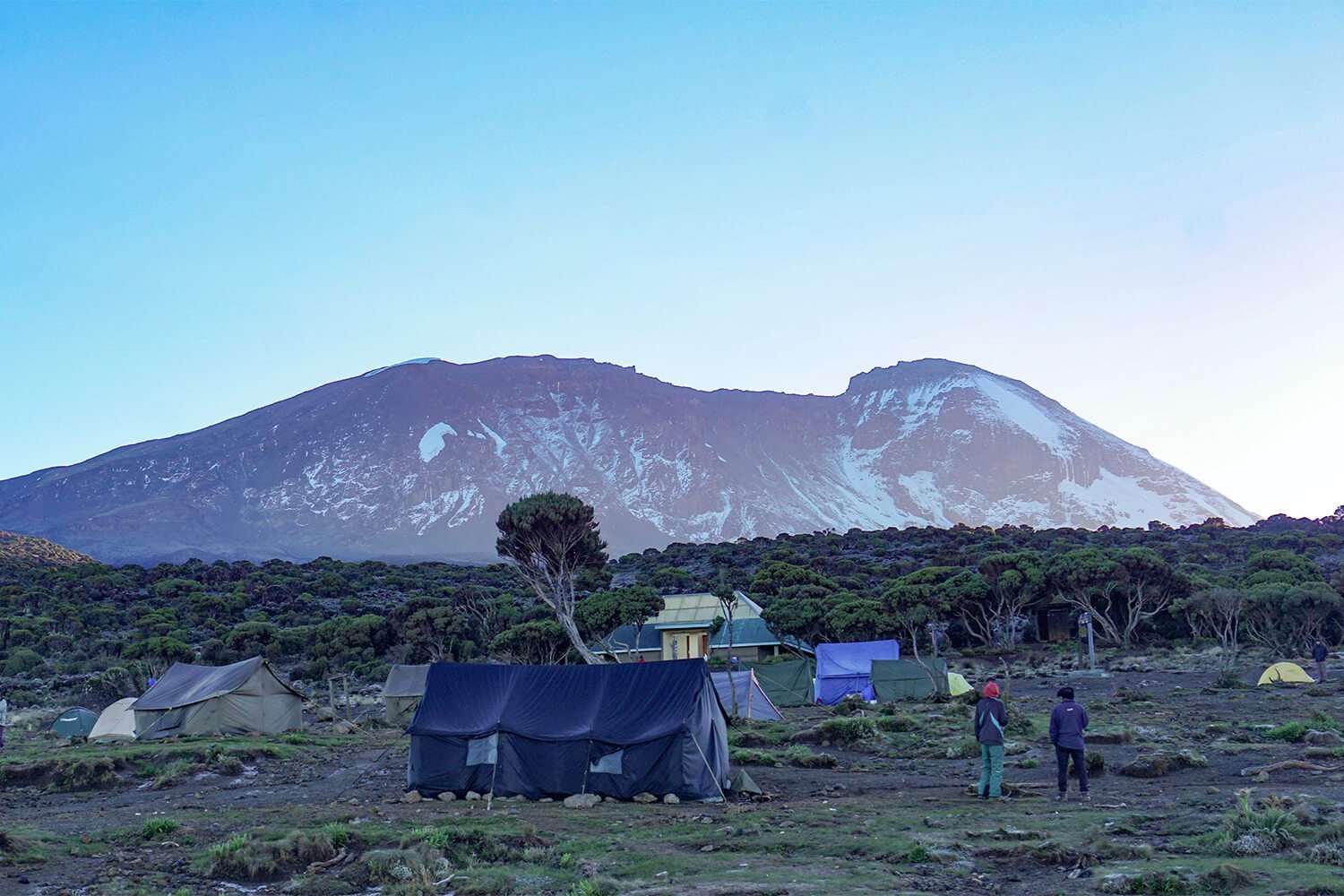
As you leave the rainforest behind, the landscape opens dramatically into the moorland zone. Giant heathers, lobelias, and groundsels create an almost otherworldly environment. Temperatures here are noticeably cooler, typically ranging from 5 to 15 degrees Celsius during the day and dropping to near freezing at night.
Rainfall in the moorland zone is less frequent than in the rainforest, but it can still occur as afternoon showers or mist. The skies are often clearer here, and on sunny days the views of the surrounding plains are spectacular. This is where most Kilimanjaro camps are located, and it is where acclimatization becomes critical.
Zone 4: Alpine Desert Zone (4,000 to 5,000 Metres)
The alpine desert zone is stark, barren, and beautiful. Vegetation is sparse, the ground is rocky and dusty, and the landscape feels lunar. Daytime temperatures can reach 10 to 15 degrees Celsius under direct sunlight, but they plummet well below freezing as soon as the sun goes down. This zone receives very little rainfall — it is effectively a high-altitude desert.
The extreme temperature swings in the alpine desert are one of the most challenging aspects of climbing Kilimanjaro. You may be comfortable in a single layer during the afternoon and need every piece of insulation you own by nightfall. Wind is also a significant factor in this zone, and wind chill can make conditions feel far colder than the actual temperature.
Zone 5: Arctic Summit Zone (5,000 to 5,895 Metres)
The summit zone is a world of ice, snow, and rock. Kilimanjaro's famous glaciers and ice fields occupy this zone, though they have been shrinking in recent decades. Temperatures at the summit are consistently below freezing, with nighttime temperatures during the summit push regularly reaching minus 15 to minus 25 degrees Celsius with wind chill.
The air at this altitude contains roughly half the oxygen found at sea level, which means your body is already under significant stress. Adding extreme cold to the equation makes summit night the most physically demanding part of any Kilimanjaro climb. Wind is persistent and can be severe, particularly on exposed ridges.
Temperature Variation by Altitude
| Zone | Altitude | Daytime Temperature | Nighttime Temperature | Precipitation |
|---|---|---|---|---|
| Cultivation | 800–1,800 m | 20–30°C | 15–20°C | Moderate, seasonal |
| Rainforest | 1,800–2,800 m | 15–25°C | 10–15°C | High, frequent mist |
| Moorland | 2,800–4,000 m | 5–15°C | -5 to 5°C | Moderate, afternoon showers |
| Alpine Desert | 4,000–5,000 m | 5–15°C | -10 to -5°C | Very low |
| Arctic Summit | 5,000–5,895 m | -10 to 5°C | -25 to -10°C | Snow, ice |
Seasonal Weather Patterns
Kilimanjaro's weather is driven by two wet seasons and two dry seasons. Understanding these patterns helps you choose the best time to climb and what conditions to expect.
Long Dry Season (June to October): This is the most popular climbing period. Skies are generally clear, rainfall is minimal, and temperatures are moderate. June and July are the driest months. August and September can be slightly windier. October marks the transition to the short rains. This season offers the most predictable weather and the highest visibility for views.
Short Rains (October to December): The short rains bring afternoon showers and some morning cloud cover. The rains are typically not continuous, and climbing during this period is still possible and often enjoyable. Trails are less crowded, and the landscape is greener. Temperatures are slightly warmer than during the long dry season.
Short Dry Season (January to February): A brief dry window between the two rainy periods. Weather is generally good with clear mornings and occasional afternoon clouds. This is a popular time to climb, particularly for those avoiding the busiest months.
Long Rains (March to May): The heaviest and most sustained rainfall occurs during these months. Trails can be muddy, visibility is often poor, and the mountain receives the majority of its annual precipitation. Many operators do not offer climbs during this period, and it is generally not recommended for first-time Kilimanjaro trekkers.
Wind and Cloud Cover
Wind is a significant factor on Kilimanjaro, particularly above 4,000 metres. Prevailing winds typically blow from the southeast, which is why the northern and western approaches (such as the Rongai and Lemosho routes) can be slightly more sheltered in their early sections. Above the alpine desert zone, wind is a near-constant companion and can reach speeds of 40 to 60 kilometres per hour during storm systems.
Cloud cover varies by zone and time of day. The rainforest zone is frequently cloudy, the moorland zone often has clear mornings with afternoon cloud buildup, and the upper zones are frequently clear during the day but can experience rapid weather changes. Morning starts are usually clearer than afternoons, which is one reason why Kilimanjaro climbs begin early each day.
Summit Night Weather
Summit night is the coldest and most exposed part of any Kilimanjaro climb. You leave your high camp between midnight and 2:00 AM and climb through the night to reach the summit at sunrise. Temperatures during the summit push typically range from minus 15 to minus 25 degrees Celsius when factoring in wind chill.
The wind on summit night can be brutal, particularly on exposed ridges. The combination of extreme cold, wind, low oxygen, and physical exertion makes this the most demanding few hours of the entire climb. Proper layering, a quality down jacket, windproof outer shell, warm gloves, face protection, and a hat are absolutely essential.
Many climbers report that the cold during the summit push is the most memorable aspect of the climb. It is not unbearable with proper gear, but it is intense. The reward — watching the sun rise over the African plains from the highest point on the continent — makes every cold step worthwhile.
How Weather Changes with Altitude
The fundamental principle is that temperature drops approximately six to seven degrees Celsius for every 1,000 metres of elevation gain. This means the summit can be 30 to 35 degrees colder than the base. However, altitude also affects humidity, wind exposure, and UV radiation, all of which contribute to how cold you actually feel.
At higher altitudes, the air is drier, which means sweat evaporates more quickly and you lose moisture faster than you realise. Wind chill amplifies the cold dramatically — a temperature of minus 5 degrees Celsius with a 40 kilometre per hour wind feels like minus 20 degrees Celsius. Sun exposure also intensifies with altitude, and sunburn can occur quickly even in cold conditions.
Clothing for Each Zone
The layering system is the foundation of Kilimanjaro clothing. You need a moisture-wicking base layer, an insulating mid-layer, and a waterproof and windproof outer layer. The specific combination changes as you move through the zones.
In the rainforest zone, a lightweight base layer and a rain jacket are usually sufficient. In the moorland zone, add a fleece or softshell mid-layer for warmth. In the alpine desert zone, you will need a warmer insulating layer and your rain gear becomes primarily a windproof shell. In the summit zone, everything comes together — base layer, insulating mid-layer, down jacket, and windproof outer shell, along with thermal underwear, warm gloves, a balaclava, and thick socks.
The key is being able to add and remove layers quickly as conditions change. Temperature swings of 20 degrees or more within a single day are normal on Kilimanjaro. Being dressed appropriately at every stage makes the difference between a comfortable trek and a miserable one.
Sun Protection at Altitude
UV radiation increases significantly with altitude because there is less atmosphere to filter the sun's rays. At 5,000 metres, UV exposure is roughly twice what it is at sea level. Sunscreen with SPF 50 or higher should be applied frequently, particularly on exposed skin. Lip balm with SPF protection is also essential. Sunglasses with UV protection are mandatory — snow blindness is a real risk in the summit zone, and the glare from snow and ice can cause permanent eye damage without proper protection.
Rain Gear and Waterproofing
Even during the dry seasons, you should carry waterproof gear at all times. Weather on Kilimanjaro can change rapidly, and a clear morning can turn into an afternoon downpour. A quality rain jacket and rain trousers that are both waterproof and breathable will keep you dry without causing excessive sweating. Consider waterproofing your daypack as well, or use a rain cover to protect electronics and personal items.
Frequently Asked Questions
What is the coldest it gets on Kilimanjaro?
During the summit push, temperatures with wind chill can reach minus 20 to minus 25 degrees Celsius or even colder. Without wind chill, nighttime temperatures at the summit camps typically range from minus 10 to minus 15 degrees Celsius. The coldest conditions are generally encountered between 2:00 AM and 6:00 AM during the summit ascent.
Do I need crampons or special equipment for snow?
Most climbers do not need crampons. The standard routes on Kilimanjaro are trekking routes, not climbing routes, and the snow on the upper mountain is generally packed enough for walking with good hiking boots. However, conditions vary seasonally and annually. Your guides will assess conditions and advise if any additional equipment is needed.
Which route has the best weather?
No single route has consistently better weather than others, as all routes converge at the same summit. However, the Rongai route on the north side tends to be drier in its lower sections because it sits in the rain shadow. The Lemosho route on the west side can also be slightly more sheltered from prevailing winds in the early stages. Weather on the mountain changes rapidly regardless of route.
Can I climb Kilimanjaro during the rainy season?
Technically yes, but it is not recommended for most climbers, particularly first-timers. The long rains from March to May bring heavy and persistent rainfall, muddy trails, reduced visibility, and cloudier conditions. Some experienced climbers choose this period for lower crowds, but the weather significantly reduces comfort and enjoyment.
How do I keep my water from freezing at high altitude?
Water can freeze in bottles above 4,000 metres, particularly at night. Keep water bottles inside your daypack rather than in external pockets. Some climbers use insulated bottle covers or thermos flasks for summit night. Another approach is to fill bottles with warm water before the summit push. Hydration bladders with insulated hoses are also an option, though water in the tube can freeze if not properly managed.
Is it always cold on the summit?
The summit zone is always cold compared to lower elevations, but daytime temperatures can be surprisingly comfortable under direct sunlight, sometimes reaching 5 to 10 degrees Celsius. The real cold comes at night and in the early morning hours, and wind chill makes everything feel dramatically colder. The combination of extreme altitude, wind, and cold is what makes summit night challenging.
How much rain should I expect on the mountain?
During the dry seasons (June to October and January to February), rainfall is infrequent and usually limited to brief afternoon showers in the lower zones. During the wet seasons (March to May and to a lesser extent October to December), rain can be persistent and heavy. Always be prepared for rain regardless of when you climb — waterproof gear is essential at every time of year.
Does altitude affect how cold I feel?
Yes, significantly. At altitude, your body is already working harder to compensate for reduced oxygen. This increased metabolic demand means you generate more body heat during exercise but cool down rapidly during rest. Dehydration, which is common at altitude, also impairs your body's ability to regulate temperature. Staying hydrated and properly layered is essential for managing the cold at high altitude.