Best Time to Climb Mount Kilimanjaro
Quick Facts
- Peak Seasons: January to March and June to October
- Wettest Months: March to May (long rains) and November (short rains)
- Driest Months: June to October and January to February
- Coldest Months: June to July (summit temperatures can reach minus 25 degrees Celsius)
- Climbable Year-Round: Yes, with varying conditions
Kilimanjaro can be climbed in every month of the year, but the experience varies enormously depending on when you go. The mountain has two main trekking seasons, two wet seasons, and months that fall somewhere in between. Understanding these patterns is essential for planning a climb that matches your priorities — whether that is clear summit views, dry trails, fewer crowds, or the best value for money.
This guide covers every month in detail so you can choose the optimal time for your trek. It is important to note that weather on Kilimanjaro is never predictable. The mountain creates its own microclimates, and conditions can change rapidly regardless of the calendar. These descriptions represent typical patterns, not guarantees.
The Two Main Trekking Seasons
Kilimanjaro's trekking calendar is shaped by two distinct dry seasons:
January to March
This is considered the "quiet season." The weather is generally dry, especially in January and February, with occasional afternoon showers. Temperatures are slightly warmer than the June to October period, which many climbers find more comfortable. The trails are less crowded than during the peak season, and the atmosphere on the mountain is more relaxed. Visibility is typically excellent, and the glaciers at the summit are well-lit by the equatorial sun. This is a popular time for climbers who want good conditions without the busiest trail experience.
June to October
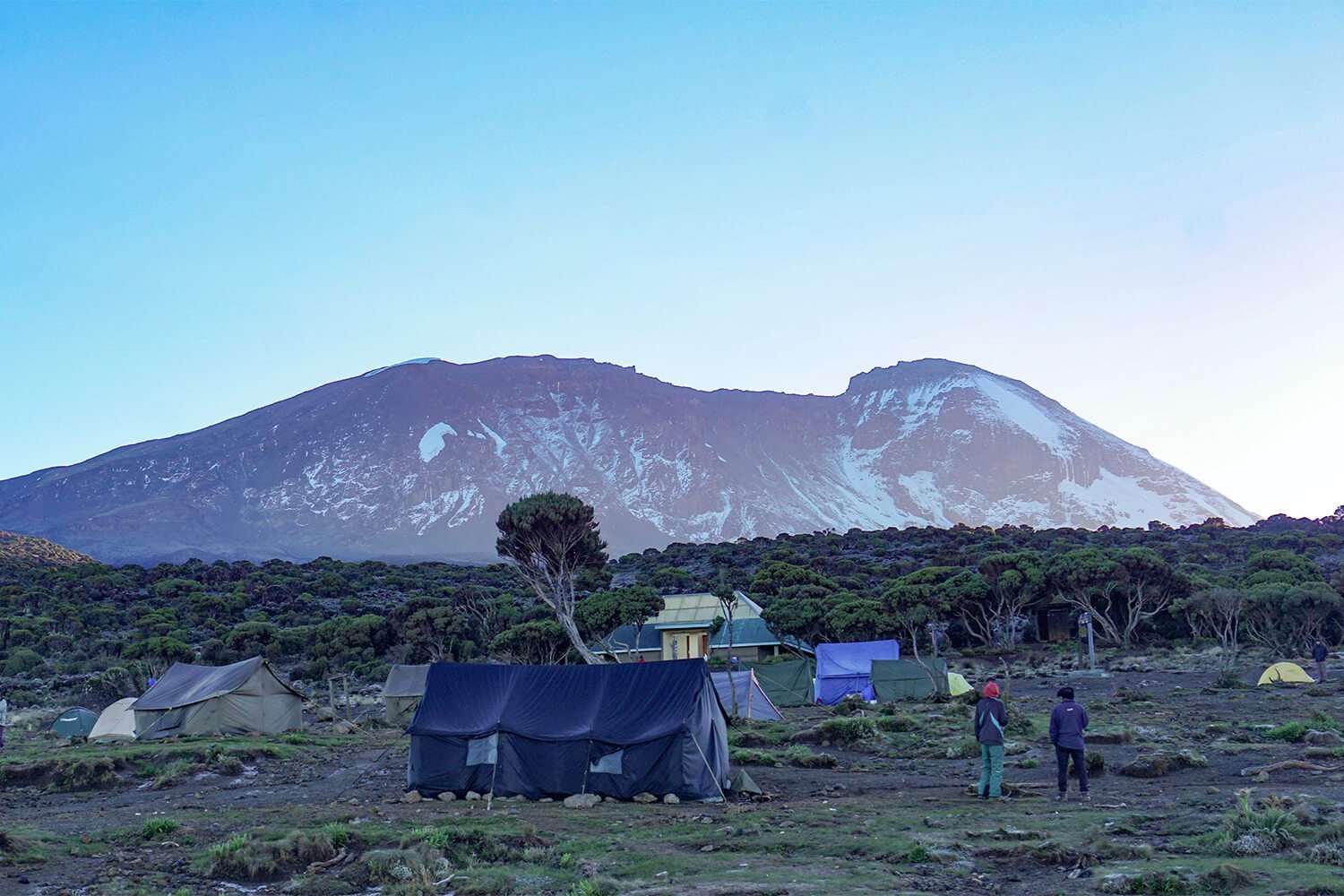
This is the primary trekking season and the busiest period on the mountain. Conditions are generally dry with clear skies, particularly in June, July, August, and September. The trade-off for the best weather is larger crowds at camps and on the trail. Temperatures are colder than the January to March period, especially at altitude, which adds to the challenge of summit night. However, the clear skies during this season provide some of the best visibility and photography opportunities of the year.
Month-by-Month Guide
January
January marks the beginning of the first trekking season. The long rains have ended, and conditions are generally dry with decreasing cloud cover. Temperatures at lower elevations are warm, and the mountain is lush and green from the recent rains. Afternoon showers are possible but typically brief. Trails are moderately busy as the season begins. January is an excellent month for photography due to the combination of green vegetation and clear skies. This is a good choice for climbers who want pleasant conditions and reasonable crowd levels.
February
February is one of the best months to climb Kilimanjaro. It is typically the driest month of the first trekking season with the most stable weather patterns. Clear skies are common, especially in the second half of the month. Temperatures are comfortable at lower elevations and cold but manageable at altitude. Trails are moderately busy but not as crowded as the peak season. Summit views are often spectacular. February is considered a premium month by many experienced operators and is an excellent choice for photographers and first-time climbers alike.
March
March marks the transition into the long rains. The first half of the month can still offer decent conditions, but the likelihood of rain increases significantly as the month progresses. Trails become muddier, cloud cover increases, and visibility at altitude decreases. The lower rainforest sections can become quite wet and slippery. Crowd levels drop as the season winds down. March is a reasonable choice for budget-conscious climbers who are prepared for wet conditions, but it is not recommended for those who prioritize clear summit views.
April
April is in the heart of the long rains and is generally the wettest month on Kilimanjaro. Heavy rainfall is common, trails can be muddy and flooded, and cloud cover often obscures views for days at a time. The lower sections of the mountain receive significant precipitation, and even the upper mountain can experience snow or sleet. Most operators run very few climbs in April. This is not a recommended month for a Kilimanjaro trek unless you have specific flexibility requirements and are comfortable with wet, challenging conditions.
May
The long rains begin to ease in May, but conditions remain wet and unpredictable. The second half of May is often better than the first, with decreasing rainfall and improving trail conditions. However, the mountain is still recovering from the rains, and muddy sections persist. Crowd levels are very low, which appeals to some climbers. May is a transitional month — it can offer reasonable conditions, but it requires flexibility and tolerance for potentially wet weather.
June
June marks the start of the primary trekking season. The rains have ended, and conditions are generally dry with clear skies. However, June can still have some cloud buildup in the afternoons, and temperatures are dropping as the cooler season begins. The mountain is in excellent condition — trails are dry, vegetation is still green from the rains, and visibility is good. Crowd levels begin to build but are not yet at their peak. June is an excellent month for climbing, particularly for those who want good weather without the busiest crowds of July and August.
July
July is one of the busiest months on Kilimanjaro and offers some of the best weather conditions of the year. Skies are typically clear with minimal rainfall. The trade-off is cold temperatures, particularly at altitude where summit night can be extremely cold with temperatures dropping to minus 20 degrees Celsius or lower. Campsites are crowded, and popular routes like Machame and Marangu can feel congested. If you want the highest probability of clear summit views and do not mind the cold or the crowds, July is a prime choice.
August
August continues the pattern of July with dry, cold conditions and high crowd levels. Visibility is excellent, and the summit views are often spectacular. The cold intensifies slightly as the month progresses. Trails and camps remain busy. August is an excellent climbing month in terms of weather, but the crowd factor is significant. Some climbers prefer August over July because the slightly colder temperatures can mean less cloud buildup at dawn, improving summit visibility.
September
September is often considered the single best month to climb Kilimanjaro. The dry season is well-established, skies are clear, and crowd levels begin to decrease from the July and August peak. Temperatures are cold but slightly more moderate than the mid-season peak. The combination of excellent weather and reducing crowds makes September a favorite among experienced operators. This is an outstanding month for photography, with clear air and dramatic lighting conditions on the mountain.
October
October marks the end of the primary trekking season. The first half of the month typically offers good conditions similar to September, with clear skies and manageable crowds. The second half becomes more transitional as the short rains approach. Afternoon cloud buildup and occasional showers become more likely. Crowd levels drop significantly as the season winds down. October is a good choice for climbers who want the tail end of dry season conditions with fewer people on the mountain.
November
November brings the short rains, which are generally lighter and less persistent than the long rains of March to May. Rainfall is typically concentrated in the afternoons, with mornings often clear. Trails can be muddy but are usually passable. Cloud cover increases, particularly at higher elevations, which can affect summit visibility. Crowd levels are low. November is a reasonable month for climbing, especially for those who do not mind afternoon showers and want a quieter experience. The first half of November is usually better than the second.
December
December is a transitional month as the short rains ease and the first trekking season approaches. The first half of the month can still be wet, but conditions improve toward the end of December. The Christmas and New Year period sees a slight increase in climbers, but it is still much quieter than the peak season. Temperatures are warming up at lower elevations. December is a good choice for climbers who want to avoid crowds and are flexible with weather conditions, particularly in the final week of the month.
Month-by-Month Comparison Table
| Month | Rainfall | Temperature | Crowds | Visibility | Recommendation |
|---|---|---|---|---|---|
| January | Low | Warm | Moderate | Excellent | Very Good |
| February | Very Low | Warm | Moderate | Excellent | Outstanding |
| March | Increasing | Warm | Low | Variable | Fair |
| April | Very High | Warm | Very Low | Poor | Not Recommended |
| May | Decreasing | Cool | Very Low | Variable | Fair |
| June | Low | Cold | Moderate | Good | Very Good |
| July | Very Low | Very Cold | High | Excellent | Excellent |
| August | Very Low | Very Cold | High | Excellent | Excellent |
| September | Low | Cold | Moderate | Excellent | Outstanding |
| October | Low to Moderate | Cool | Low | Good | Very Good |
| November | Moderate | Cool | Low | Variable | Fair to Good |
| December | Decreasing | Warm | Low | Variable | Good |
Choosing Based on Your Priorities
Best for Clear Summit Views
June, July, August, and September offer the highest probability of clear skies at the summit. Within this window, September often provides the best combination of clear weather and manageable crowds. February is also excellent during the first trekking season.
Best for Fewer Crowds
April and May have the fewest climbers but come with wet conditions. For good weather with fewer people, consider January, March (first half), October, or November (first half). January and February are particularly good choices for those who want a quieter experience without sacrificing weather quality.
Best for Budget Travel
The shoulder seasons of March, May, November, and December typically offer the best rates from operators. Some companies offer discounts of 10% to 20% during these periods. The trade-off is less predictable weather, but the savings can be significant.
Best for Photography
September and February are widely considered the best months for photography. Clear air, dramatic lighting, and stunning cloud formations create exceptional conditions. The green vegetation from the rains in January and February adds vibrant color to lower-altitude shots.
Best for Warmth
If you are sensitive to cold, January and February offer the warmest summit conditions. Even during these months, summit night is cold, but temperatures are several degrees higher than during the June to August period.
Route Considerations by Season
Some routes perform better in certain seasons. The Rongai Route, which approaches from the northern side of the mountain, receives less rainfall than southern routes and can be a better option during the wetter months. The Northern Circuit Route also benefits from its northern exposure. The Machame Route and Lemosho Route are both excellent during the dry seasons but can be quite muddy during the rains. The Marangu Route, the shortest standard option, is also best attempted during the drier months when trail conditions are most favorable.
What About Full Moon Climbs?
Some operators offer full moon summit attempts, which allow climbers to reach Uhuru Peak by moonlight rather than headlamp. The full moon occurs approximately once per month, so timing a climb to coincide with it is possible in any season. A full moon summit is a spectacular experience, but it does not change the fundamental weather patterns of the mountain. You still need to choose your month based on the seasonal conditions described above.
Frequently Asked Questions
Can I climb Kilimanjaro in August if I hate the cold?
August is one of the coldest months on Kilimanjaro, particularly at altitude. Summit night temperatures can reach minus 20 to minus 25 degrees Celsius with wind chill. If cold is a serious concern, January or February offers significantly warmer conditions while still providing excellent weather. However, if you are well-prepared with proper cold-weather gear, August is manageable for most people.
Is it safe to climb during the rainy season?
Kilimanjaro is climbed during the rainy season, though it is not recommended. The primary risks are slippery trails, reduced visibility, and the increased likelihood of altitude sickness symptoms being masked or exacerbated by cold and wet conditions. Most operators strongly advise against climbing during April and May unless you have specific requirements and are fully prepared for wet conditions.
How far in advance should I book for peak season?
For the peak months of July, August, and September, booking 6 to 12 months in advance is advisable, especially for popular routes like Machame and Marangu. Lemosho and Northern Circuit tend to have slightly more availability due to their higher cost and longer duration. January and February also benefit from advance booking, though the demand is lower.
Does the time of year affect which route I should choose?
Yes. During the wetter months, routes with better drainage and less muddy terrain are preferable. The Rongai Route is drier than southern routes because it is on the rain shadow side of the mountain. During the dry season, all routes are in good condition and the choice depends more on your preferences for scenery, crowds, and acclimatization profile.
What is the weather like at the summit in different months?
At the summit (5,895 meters), conditions are cold year-round. During the dry season months of June to September, summit temperatures typically range from minus 15 to minus 25 degrees Celsius with wind chill. During January to February, summit temperatures are slightly warmer, typically minus 10 to minus 20 degrees Celsius. Wind is a significant factor at the summit regardless of the month and can dramatically increase the perceived cold.
Can I climb Kilimanjaro during Christmas or New Year?
Yes. Late December and early January offer good conditions, particularly in the second half of December when the short rains have subsided. It is a quieter period than the peak season, and the festive atmosphere on the mountain can be enjoyable. Some operators offer special holiday departures with festive celebrations at camp. Book well in advance as holiday slots fill quickly.
What month has the best balance of weather and crowds?
September is widely considered the best balance month. The dry season is well-established with excellent visibility, but the July and August crowd peak has subsided. June and October also offer this balance, with June being slightly less crowded than September and October being slightly wetter. For the first trekking season, February provides excellent weather with moderate crowd levels.
Does climate change affect Kilimanjaro's weather patterns?
Climate change is affecting Kilimanjaro in multiple ways, including reduced glacier coverage, shifting rainfall patterns, and altered temperature profiles. The general seasonal patterns described in this guide remain reliable, but the intensity and timing of weather events can vary from historical norms. This is another reason to choose a reputable, experienced operator who monitors conditions closely and can adapt plans as needed.
For route-specific information and booking details, explore our guides to the Kilimanjaro climbing overview, Machame Route, and Lemosho Route.