We Know Tanzania Because Tanzania Is Home
We Know Tanzania Because Tanzania Is Home
The only route from the north side of Kilimanjaro. Remote wilderness and excellent summit views.
The Machame Route, affectionately known as the "only route from the north," is one of the most popular paths to the summit of Mount Kilimanjaro. This 7-day itinerary offers trekkers a diverse and spectacular journey through multiple ecological zones, from lush rainforest to alpine desert, culminating at the majestic Uhuru Peak.
What sets the Machame Route apart is its excellent acclimatization profile combined with stunning scenery. The route approaches from the north, providing dramatic views of the mountain and surrounding landscapes. With a 90% success rate, this route is perfect for climbers who want both adventure and a high probability of reaching the summit.
The trail is more demanding than the Marangu Route, earning it the "Whiskey" nickname (compared to Marangu's "Coca-Cola" route), but the rewards are well worth the extra effort. You'll traverse the spectacular Shira Plateau, conquer the challenging Barranco Wall, and approach the summit via Barafu Camp.
Arrive at Kilimanjaro International Airport, where our representative will meet you and transfer you to your hotel in Moshi. After check-in, take time to relax and recover from your journey.
Depending on your arrival time, your mountain guide will conduct a pre-trek briefing, introduce the trekking team, review the route, check your equipment and explain the safety procedures for the climb.
After breakfast, drive from Moshi toward the northern side of Mount Kilimanjaro, close to the Tanzanian–Kenyan border. At Rongai Gate, complete the necessary park registration and meet your mountain crew before beginning the trek.
The trail starts through cultivated farmland before entering the montane forest. The Rongai Route is known for its quieter atmosphere and gradual approach to Kilimanjaro. Walk at a comfortable, controlled pace as your body begins adapting to the mountain environment. The forest is rich in vegetation and birdlife, and you may occasionally encounter monkeys along the trail.
After breakfast, continue climbing through the upper forest and heath vegetation. The landscape gradually opens as you leave the denser forest behind. The trail becomes more exposed and provides increasingly impressive views across the northern plains of Tanzania and toward Kenya.
Continue toward the Second Cave area, where the vegetation becomes shorter and the environment transitions into the moorland zone. The pace remains deliberately slow to encourage proper acclimatization.
After breakfast, continue eastward across the northern slopes of Kilimanjaro. Today's hike is relatively short but provides another important stage of altitude adaptation. The trail climbs gradually through open moorland and semi-desert terrain.
As you gain elevation, the dramatic Mawenzi massif becomes increasingly prominent. Continue toward Third Cave Camp, located in the high-altitude zone beneath the northern slopes of Kibo. After reaching camp, enjoy lunch and spend the afternoon resting and hydrating.
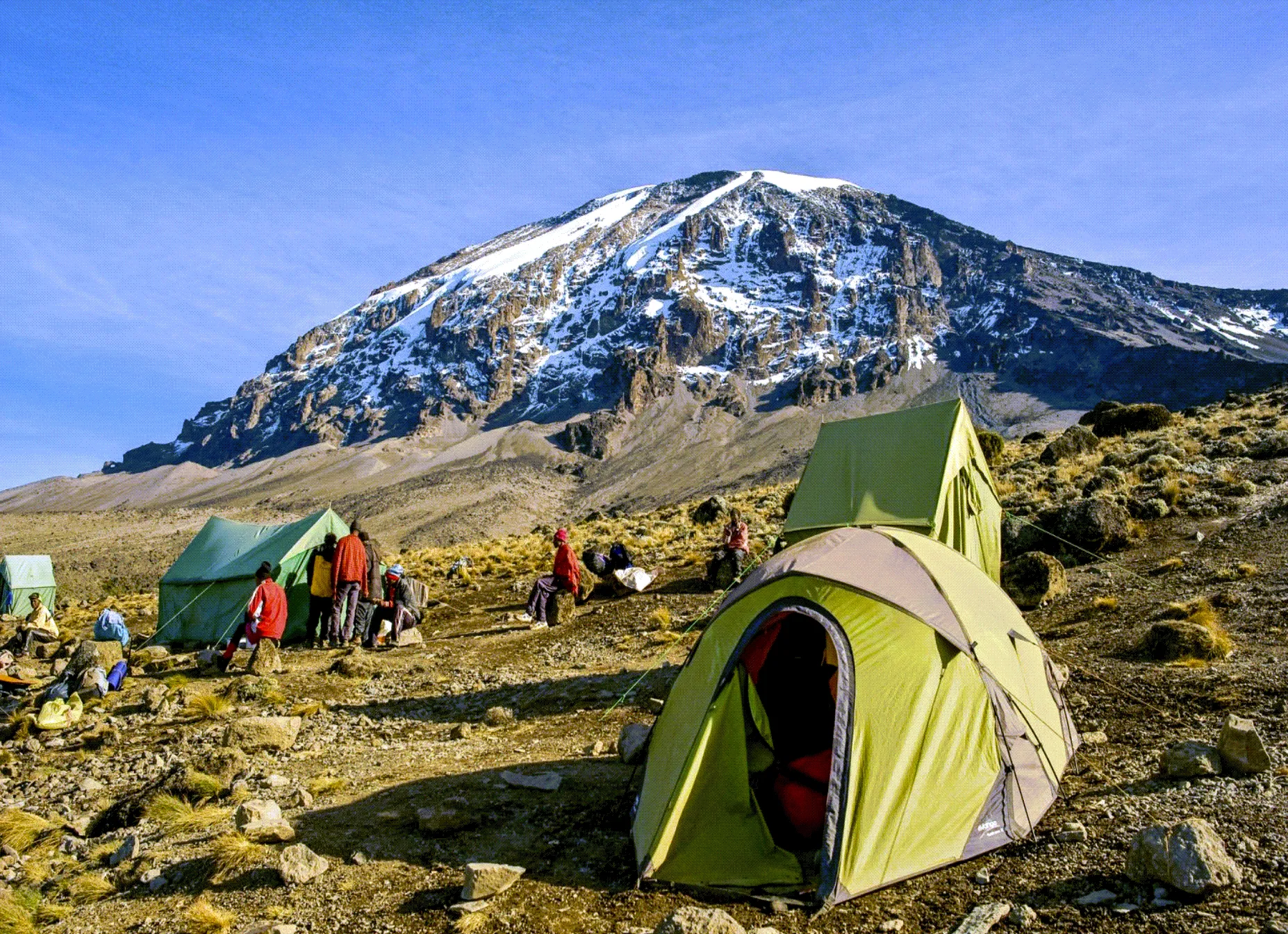
After breakfast, leave Third Cave Camp and continue toward Kibo, the highest volcanic cone of Mount Kilimanjaro. The trail crosses the vast high-altitude area known as The Saddle, the broad volcanic desert separating Mawenzi Peak from Kibo Peak.
Vegetation becomes extremely sparse as you enter the alpine desert. The surrounding landscape is dramatic and exposed, with Kibo's summit massif becoming increasingly dominant. Maintain a slow and steady pace as the altitude increases. Continue toward Kibo Hut, situated at approximately 4,700-4,750 metres. Upon arrival, have an early dinner and prepare your summit equipment. Your guide will provide a final summit briefing. Try to rest as much as possible because the summit attempt will begin around midnight.
Summit Day — Start Around Midnight. Wake up around midnight for the most demanding stage of your Kilimanjaro adventure. After a light snack and hot drink, begin the ascent in darkness using headlamps. The trail climbs steadily over loose volcanic scree toward the crater rim. The pace will be deliberately slow, with regular short breaks determined by your guide.
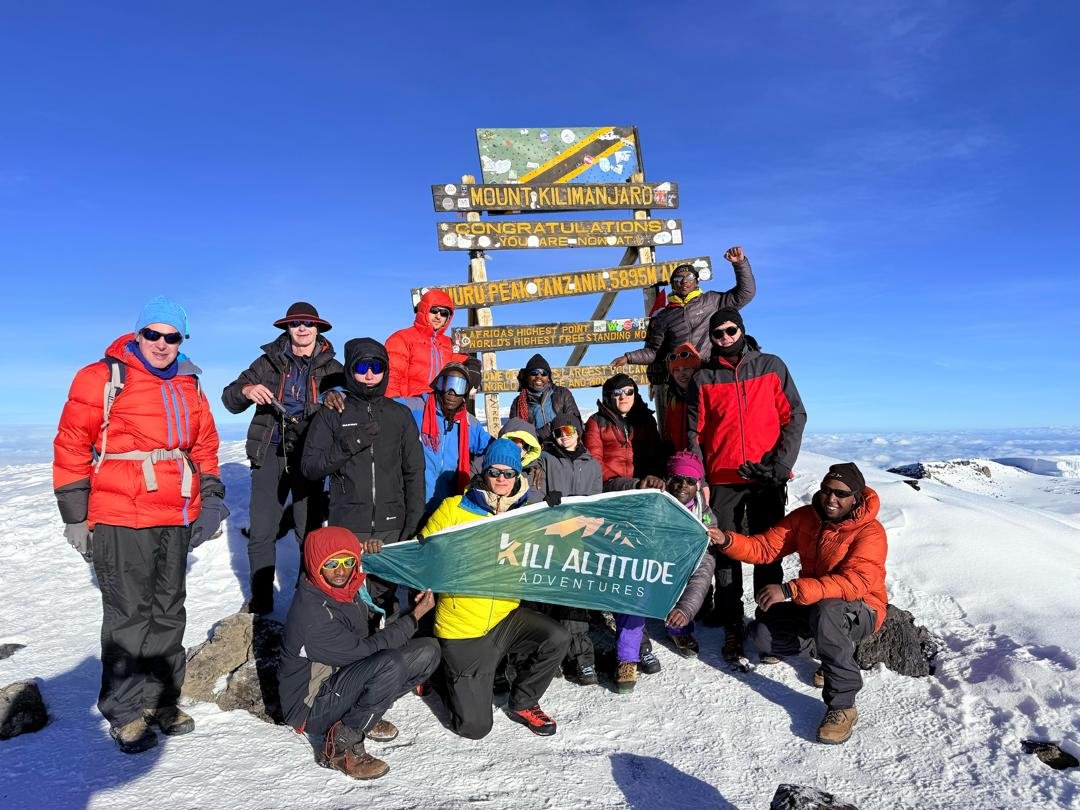
Continue toward Gilman's Point at approximately 5,681 m on the crater rim. From Gilman's Point, continue around the crater rim toward Stella Point and then onward toward Uhuru Peak. At 5,895 metres, Uhuru Peak is the highest point in Africa. Take time to celebrate your achievement, take photographs and enjoy the summit views when weather conditions permit.
After reaching the summit, begin the long descent toward Kibo Hut before continuing down to Horombo Hut. This is a very long and demanding day, combining the summit ascent with a major descent. Your guide will carefully monitor the group throughout the day.
After breakfast, begin your final descent from Horombo Hut. The trail passes through the moorland zone before entering the lush montane rainforest around Mandara Hut. As you descend, the vegetation becomes increasingly dense and the air becomes warmer and richer in oxygen.
Continue downhill to Marangu Gate, where you will complete the official park exit procedures. After signing out, receive your Kilimanjaro summit certificate and say farewell to your mountain crew. A private vehicle will meet you at the gate and transfer you back to Moshi. Enjoy a well-earned shower, rest and celebration after completing your Kilimanjaro adventure.
After breakfast, enjoy your final morning in Tanzania before your scheduled transfer to Kilimanjaro International Airport. Depending on your travel plans, we can also arrange an extension to a Tanzania safari or Zanzibar beach holiday.
The Machame Route earned its nickname because it's considered more challenging and "stronger" than the Marangu Route, which is known as the "Coca-Cola Route." Just as whiskey is stronger than Coca-Cola, Machame offers a more demanding but more rewarding experience with better scenery and acclimatization.
Both routes offer excellent acclimatization and high success rates. Machame is slightly shorter (62km vs 70km) and starts from the north rather than the west. Machame is more popular and can be busier, while Lemosho offers a more remote wilderness experience. Both routes converge at Barranco Camp and share the same summit approach.
Despite looking intimidating, the Barranco Wall is not technically difficult and doesn't require climbing equipment. It's a scramble requiring you to use your hands in sections, but our experienced guides will assist you every step of the way. Most climbers find it one of the most fun and rewarding parts of the trek.
The best times are during the dry seasons: January to mid-March and June to October. These months offer the most stable weather and clearest views. January-February tends to be warmer, while June-October provides excellent visibility. Avoid April-May and November when heavy rains can make the trail more challenging.
We recommend 2-3 months of preparation including cardio exercises (running, cycling, swimming), strength training focusing on legs and core, and practice hikes with a loaded backpack. Mental preparation is equally important - the summit day is challenging but achievable with determination and our expert guidance.
The Machame route was everything we hoped for and more. The scenery changed every day, from rainforest to alpine desert. The Barranco Wall was challenging but fun. All 6 of our group made it to the summit thanks to the great acclimatization schedule!
The Kili Altitude team went above and beyond. Our guide noticed I was struggling on day 3 and adjusted the pace perfectly. The food was delicious and plentiful. Summit sunrise was the most beautiful thing I've ever seen. Highly recommend!
Start planning your climb today. Our experienced team is ready to help you conquer the Roof of Africa safely.